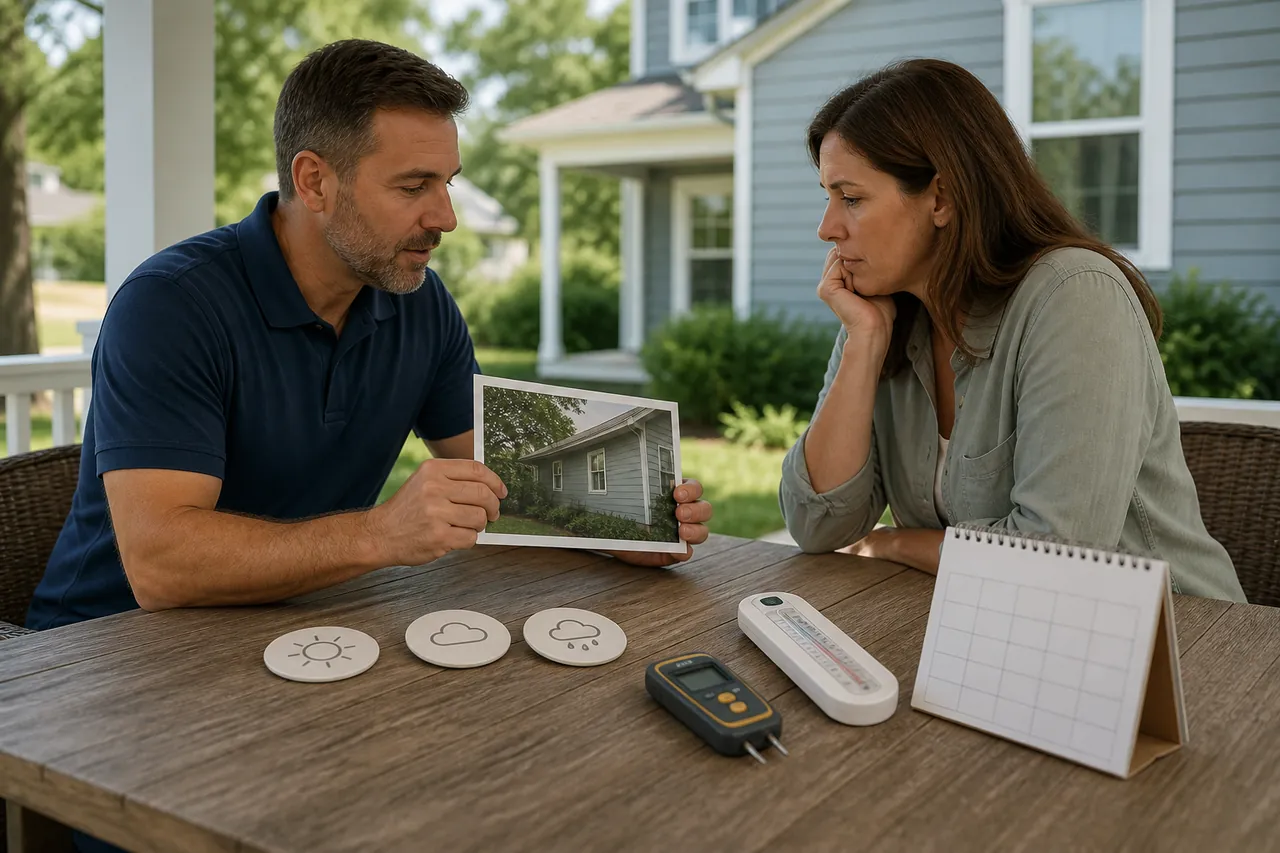
Exterior painting depends on more than whether rain appears in the forecast. The surface itself may hold moisture, direct sun can heat one elevation, wind can affect application, and overnight conditions can influence drying. A simple weather record helps the homeowner understand scheduling conversations while leaving final application decisions with the painting contractor and product requirements.
Track Conditions by Elevation
The north, south, east, and west sides of a building can behave differently on the same day. Note when each elevation receives direct sun and when it returns to shade. Record areas sheltered by porches, trees, roof overhangs, or nearby structures.
If one wall remains damp longer after rain or morning dew, identify its exact location. Do not assume the cause is weather alone; drainage, leaks, vegetation, and substrate condition may need separate assessment.
A photograph taken at the same time on several days can show recurring shade or visible dampness. Capture it from safe ground without climbing ladders or roofs.
Keep a Short Daily Log
Write down recent rain, morning dew, temperature range, humidity in general terms, wind, cloud cover, and forecast changes. Note the time of any shower rather than recording only that the day was “wet.” Surfaces may remain unsuitable after skies clear.
Include overnight conditions. A warm afternoon does not erase a cold night, and an evening temperature drop can affect a product applied late in the day. The contractor should compare the actual surface and forecast with manufacturer guidance.
Weather apps provide useful context but do not measure the wall. Ask how the crew checks conditions at the work area and how readings influence the start, stop, or shift to another elevation.
Note Surface Moisture and Building Issues
Record peeling, blistering, staining, soft areas, open joints, and water marks. Identify recent roof, gutter, siding, window, or plumbing work. Paint should not be used to hide active water entry or deteriorated material that needs repair.
Do not probe damaged siding, scrape suspect older coatings, or use a household moisture meter as a substitute for professional evaluation. Unknown existing coatings and substrates may require testing and controlled preparation.
Vegetation touching the building can slow drying and restrict access. Note it in advance so trimming or protection responsibilities can be discussed without last-minute damage.
Discuss Wind and Site Exposure
Wind affects overspray, dust, debris, ladder safety, and the behavior of some coatings. Record exposed corners and times when gusts are common. Nearby vehicles, neighboring property, roofs, landscaping, and pedestrian areas may require additional protection or a different application method.
Airborne dust, pollen, and insects can also affect a fresh finish. These conditions may be temporary, so the work plan should allow the crew to adjust rather than force a fixed daily output.
Ask How Delays Are Handled
The proposal should explain weather-dependent scheduling, communication, and how partially prepared surfaces are protected. Ask what happens if conditions change after work begins and how the contractor determines when the surface is ready to resume.
Keep the daily notes with project photos and product information. They are not evidence that a particular coating must be applied; they are context for a professional decision.
Exterior weather planning is an exercise in patience and observation. By tracking exposure, moisture, recent conditions, and site risks, homeowners can have a more informed conversation about why work moves, pauses, or changes elevation—without reducing a technical application decision to a single forecast icon.