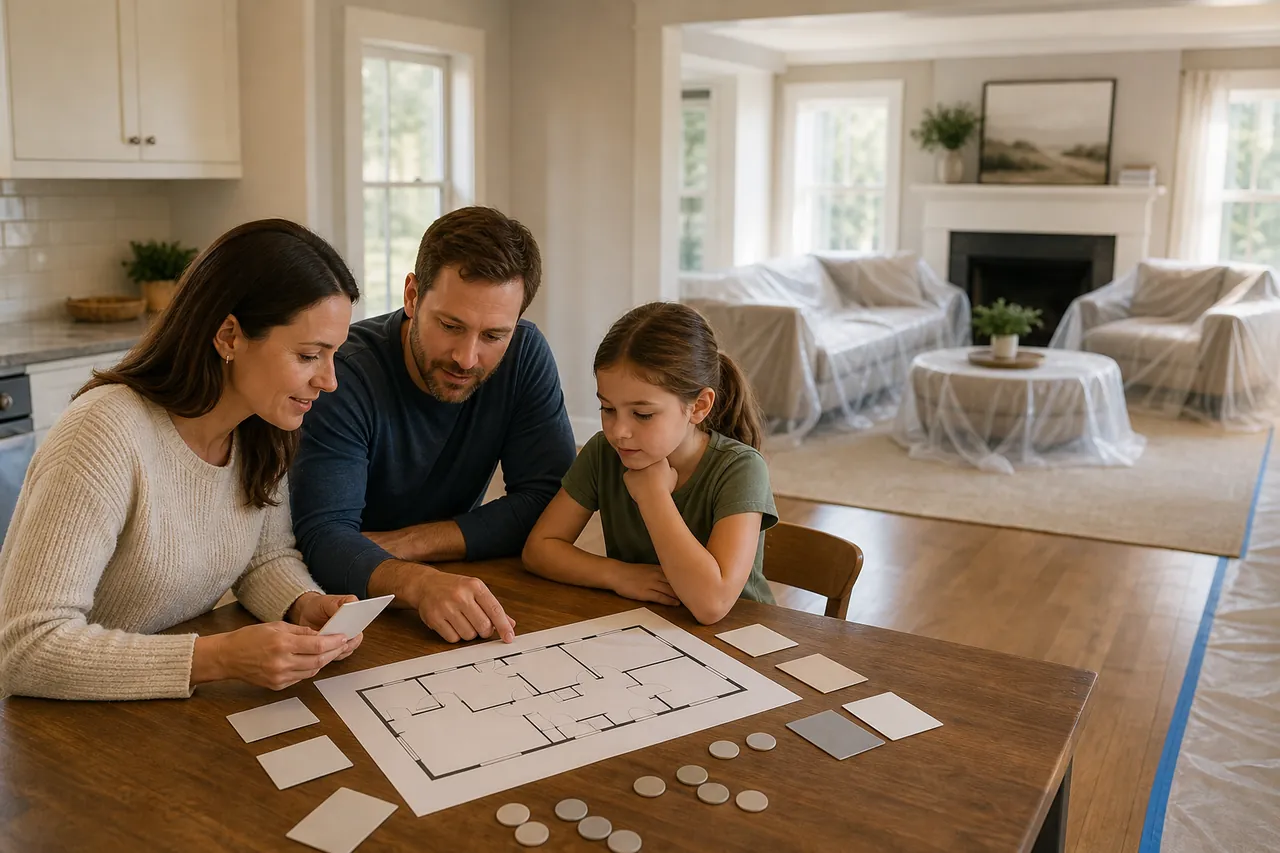
Painting a home while people still live in it requires more than choosing colors and clearing a few walls. Rooms must remain safe, pets and belongings need protection, and the sequence should respect sleep, work, meals, and access to essential spaces. A written occupancy plan helps the painting crew and household coordinate those needs before equipment arrives.
Identify Rooms That Must Stay Available
List bedrooms, bathrooms, kitchens, workspaces, entrances, and mobility routes that cannot all be closed at once. Note naps, shift work, remote meetings, school schedules, caregiving, and other time-sensitive routines. The contractor can then propose a room sequence that preserves essential access.
If a room must return to limited use each evening, say so. Ask what “usable” means at that stage: tools removed, floor protection secured, furniture accessible, and ventilation requirements met. Dry-to-touch does not necessarily mean a coating has fully cured or is ready for normal contact.
Plan Furniture and Belongings
Ask which small items the household should remove and how far furniture needs to move. Create a separate plan for heavy pieces, wall-mounted electronics, pianos, aquariums, medical equipment, and fragile collections. Do not disconnect, drag, or stack items unsafely just to meet a generic instruction.
Label curtains, switch plates, hardware, and removable fixtures by room if the crew will take them down. Identify storage space for items so they do not block the next work area.
Closets require a clear decision. If interiors are included, ask how clothing and stored belongings should be handled. Moving them from room to room without a sequence can create repeated work.
Protect People and Pets
Tell the contractor about children, pregnancy, allergies, respiratory concerns, chemical sensitivities, and mobility limitations relevant to the project. Request product information and the proposed approach to ventilation, daily access, and re-entry. Discuss health questions with an appropriate medical professional when needed.
List all pets, including birds, fish, reptiles, and animals kept in enclosures. Different animals may have different sensitivities and relocation challenges. A closed door is not a complete plan if workers need to pass through the room.
Set boundaries for wet surfaces, tools, ladders, cords, and stored materials. Children and animals should not enter active work zones.
Establish a Daily Rhythm
Agree on arrival and departure windows, entry procedures, parking, restroom use, and who receives questions. Decide how the crew will communicate when a room changes status or an unexpected condition requires approval.
Ask what protection remains overnight and how walkways will be kept clear. Materials and tools should have an agreed storage location. House keys, alarm instructions, and access codes should be handled securely and only when necessary.
Prepare for Dust, Odor, and Noise
Surface preparation may create noise and dust even when controls are used. Identify sensitive electronics, food areas, return-air grilles, and rooms requiring extra isolation. Ask how debris is contained and how the site is cleaned each day.
Ventilation should match the products and property. Do not improvise fans in a way that spreads dust or creates security and weather problems; follow the contractor’s property-specific plan.
Confirm the Sequence in Writing
Attach the room order, colors, surfaces, preparation, access limitations, and household responsibilities to the scope. Build in checkpoints for rooms with significant repair or color transitions. If the sequence changes, update the plan.
An occupied painting project will still interrupt normal life, but the disruption can be organized. Clear room priorities, safe belongings management, occupant information, and daily communication allow the contractor to work methodically while the household understands what is accessible and what happens next.