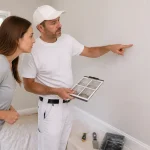
Preparation determines what the new coating is being asked to cover and hold onto. Yet proposals often summarize it with a single phrase such as “prep as needed.” Before comparing painting scopes, ask what that language means for the actual walls, trim, ceilings, or exterior surfaces on your property.
How Will Surfaces Be Cleaned?
Different rooms collect different residues. Kitchens may have grease, bathrooms can have soap and condensation, trim often holds hand oils, and exterior surfaces collect dirt and biological growth. Ask which areas will be cleaned, by what general method, and how surrounding materials will be protected.
Visible mold, contaminated material, active leaks, or heavy smoke damage may require assessment outside ordinary painting. A responsible contractor should identify that boundary rather than promise that paint alone will solve the underlying condition.
Which Repairs Are Included?
Point out cracks, dents, nail holes, peeling edges, failed caulk, damaged corners, loose material, and prior patches. Ask which repairs are part of the quoted preparation and which would require a change after closer inspection.
Clarify the expected finish level. A small fastener hole, a broad damaged drywall area, and a recurring crack are not equivalent. Texture matching may remain visible under certain light, and old plaster can behave differently from modern board. The scope should describe reasonable expectations for the specific surface.
If water stains or movement-related cracks are present, confirm that the source has been assessed before cosmetic repair proceeds.
Where Will Sanding or Abrasion Occur?
Ask which surfaces need dulling, smoothing, feathering, or removal of loose coating. Discuss dust control, room isolation, cleanup, and protection of occupants and belongings. Older coatings or unknown materials may require testing and regulated procedures; homeowners should not sand a suspect surface to “help” before it has been evaluated.
Find out whether trim, cabinets, doors, and glossy surfaces receive different preparation. The answer should connect the method with the material and existing finish, not treat the whole project as one wall type.
When Is Primer Planned?
Primer may be proposed for new material, repaired areas, stains, adhesion, color change, or substrate-specific needs. Ask whether the scope includes spot priming or full priming and which conditions could change that decision.
Do not assume primer cures active moisture, seals every odor permanently, or replaces cleaning and repair. Request the product type and purpose in plain language. If an unexpected substrate is found, the contractor should pause and discuss the revised preparation.
What Will Be Masked and Protected?
Confirm how floors, furniture, fixtures, windows, hardware, landscaping, and adjacent finished surfaces will be covered. Ask who removes switch plates, window treatments, and fragile items, and how components are labeled for reinstallation.
For occupied interiors, discuss ventilation, daily cleanup, tool storage, and room access. For exteriors, ask how wind, nearby vehicles, roofs, and neighboring property influence spray or overspray controls.
How Will Preparation Be Verified?
Request a walkthrough after major preparation and before finish coats cover the evidence, especially in areas with extensive repair. Document approved changes. The final scope should distinguish preparation included everywhere from condition-dependent work.
Good questions do not require the homeowner to choose technical methods. They make the contractor’s reasoning visible. When cleaning, repair, abrasion, primer, and protection are tied to actual surfaces, both parties can evaluate the same preparation standard instead of relying on an undefined promise.